Commercial Cleaning Services in Denver, CO: What’s Included & How to Scope
This guide explains what commercial cleaning services typically include, how pricing works, and how to build a clear scope that gets accurate, comparable quotes.
Key takeaways:
- Standard janitorial service covers trash removal, dusting, vacuuming, mopping, restroom cleaning, and high-touch disinfection.
- Specialty add-ons include deep restroom cleaning, breakroom detailing, carpets, floor care, windows, high dusting, and post-construction cleanup.
- Different businesses require different scopes — offices, retail, medical, dental, restaurants, and post-construction sites have unique cleaning needs.
- Pricing varies by square footage, layout, number of restrooms/kitchens, cleaning frequency, and add-on services.
- The guide recommends scoping by breaking the facility into zones (lobby, cubicles, offices, restrooms, kitchens, specialty areas) and assigning tasks + frequency to each.
- Includes practical questions to ask vendors and highlights red flags such as vague scopes or lack of insurance.
- Compares in-house janitorial staff vs outsourcing, explaining cost, management, and flexibility trade-offs.
- Shows how to use a clear, consistent scope to get apples-to-apples quotes from cleaning providers.
Commercial cleaning services in Denver, CO can be hard to compare. One company talks in square feet, another in “janitorial bundles,” and the prices rarely line up. If you manage a building or run a business, what you really want to know is simple: what should be included, how much it should roughly cost, and how to scope it so you are not overpaying or stuck with a weak service.
This guide walks through what is typically included, how pricing usually works in Denver, and a practical way to scope services so you can get clear, apples-to-apples quotes.
What commercial cleaning services in Denver usually include
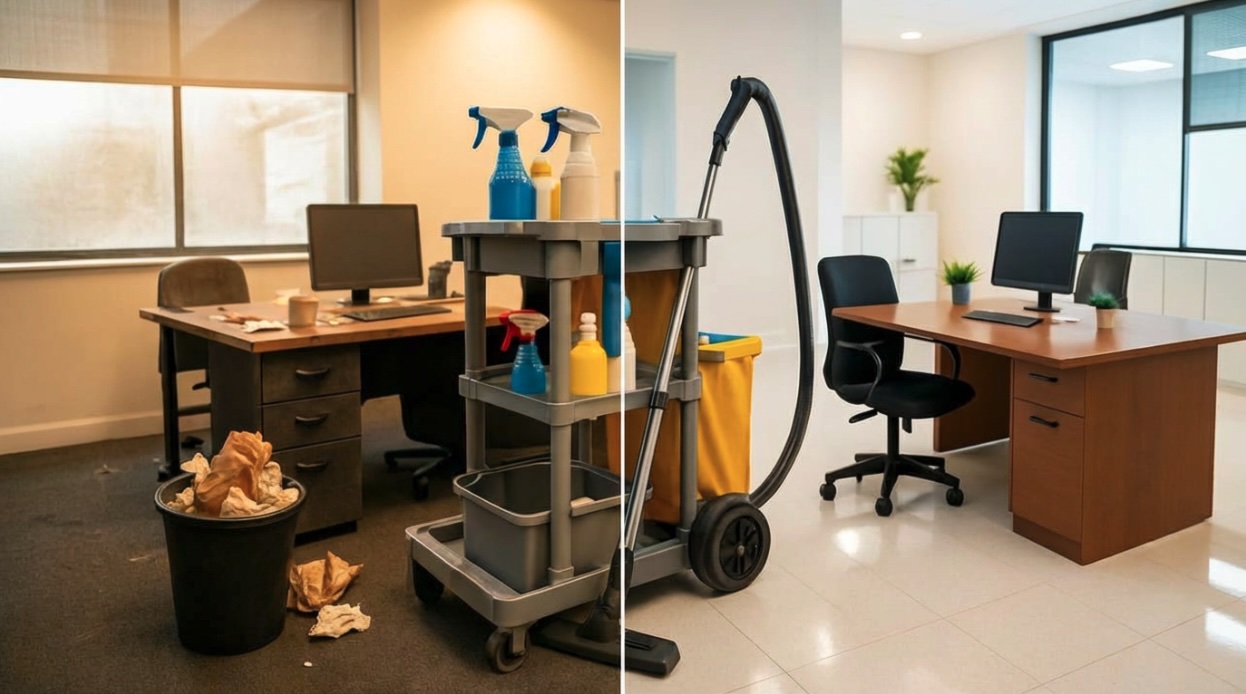
Most commercial cleaning contracts in Denver are built around a standard nightly or weekly janitorial package, with optional add-ons.
A standard scope normally covers things like emptying trash and recycling, dusting horizontal and high-touch surfaces, vacuuming carpets and rugs, sweeping and mopping hard floors, and cleaning and disinfecting restrooms. Restroom work typically includes toilets, sinks, mirrors, and floors, plus restocking toilet paper, soap, and paper towels if you supply them. In offices and common areas, cleaners usually wipe down door handles, light switches, shared touchpoints, and spot-clean obvious marks on entry glass or interior windows. Regular cleaning of high-touch surfaces like these is one of the core recommendations in workplace hygiene guidance from the Centers for Disease Control and Prevention (CDC).
On top of that, most companies offer add-on or periodic services such as deep restroom and breakroom detailing, carpet cleaning, hard floor care, window cleaning, high dusting, post-construction cleanup, and targeted disinfection. These are often not bundled automatically, so it is important to have them clearly listed as separate line items in your quote.
How scopes differ by facility type in Denver
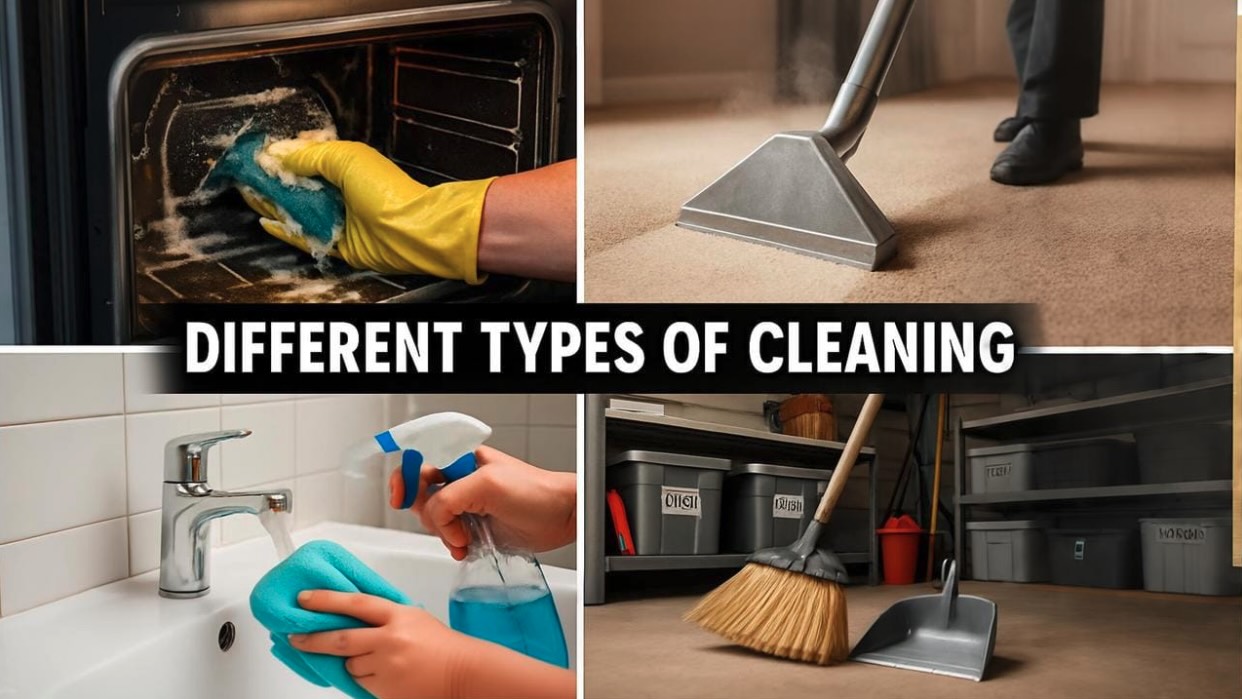
The right scope for a downtown Denver office is very different from what a retail store, medical clinic, or restaurant needs.
For offices and coworking spaces, the focus is on desks, conference rooms, phone booths, restrooms, lobbies, and shared kitchens or coffee bars. Many offices use nightly or three-times-per-week cleaning for trash, restrooms, and floors, plus occasional deep services for carpets and hard floors.
For retail stores and salons, front-of-house presentation matters most. That usually means more frequent attention to floors, entry glass, display fixtures, fitting rooms, and any customer restrooms. Back-of-house storage or staff areas tend to be smaller and simpler.
For medical and dental offices, compliance and consistency matter as much as appearance. Scopes often include more frequent restroom and treatment-area disinfection, careful cleaning of waiting rooms and check-in counters, and the use of appropriate disinfectants and documented processes. The CDC’s infection prevention and control guidance for dental settings is a good example of how structured environmental cleaning and disinfection supports patient and staff safety. These facilities usually pay more than a standard office because of added risk and regulatory expectations.
For restaurants and food service, cleaning is heavier and more specialized. Typical scopes include degreasing floors and back-of-house surfaces, deep cleaning around cooklines and prep areas, and keeping restrooms at a standard that will stand up to health inspections. Much of this work is aimed at supporting the sanitation and surface-cleaning expectations laid out in the U.S. Food and Drug Administration’s Food Code, which local health departments use as a model for restaurant inspections. This kind of work is more intensive than basic janitorial and is often priced higher per square foot.
For post-construction and build-outs, the work is usually a short-term but intensive project. Crews remove construction dust from every surface, detail windows, sills, and baseboards, and tackle paint and adhesive residue. Post-construction cleanup is almost always quoted separately from ongoing service.
How commercial cleaning is typically priced in Denver

Most commercial cleaners in Denver rely on a mix of price-per-square-foot estimates, hourly rates, and flat monthly contract pricing.
For general commercial spaces like standard offices and small retail, many quotes land in a per-square-foot range that adjusts based on frequency and facility type. Light, once-a-week cleaning in a simple office sits at the low end, while daily cleaning in a healthcare setting sits much higher. Hourly rates are more common for one-time projects, small spaces, or specialty work and often reflect the level of skill and equipment involved. Flat monthly contracts bundle everything together for ongoing service based on your square footage, scope, and frequency.
Your actual price will depend heavily on your total square footage and layout, the number of restrooms and breakrooms, how often you want service, and whether you add services like carpet cleaning, floor refinishing, or regular window cleaning. A well-defined scope makes it much easier to see whether a quote is reasonable for your building.
Daily vs weekly office cleaning: how often do you really need?

Choosing between daily and weekly office cleaning comes down to traffic, space types, and what you and your staff consider acceptable.
A small, low-traffic studio with ten people might do fine with cleaning two or three times per week, especially if staff handle basic dish duty and quick wipe-downs. A busy call center, clinic, or office with frequent visitor traffic may need nightly service just to keep restrooms, kitchens, and entry areas under control.
A common pattern in Denver offices is to have nightly attention on restrooms and kitchen or breakroom areas, two or three full-office visits per week for dusting and floors, and quarterly or semi-annual deep work for carpets and hard floors. Starting with an assumption like that, you can adjust up or down after a month based on how the space actually looks and feels between visits.
How to scope commercial cleaning for your Denver business
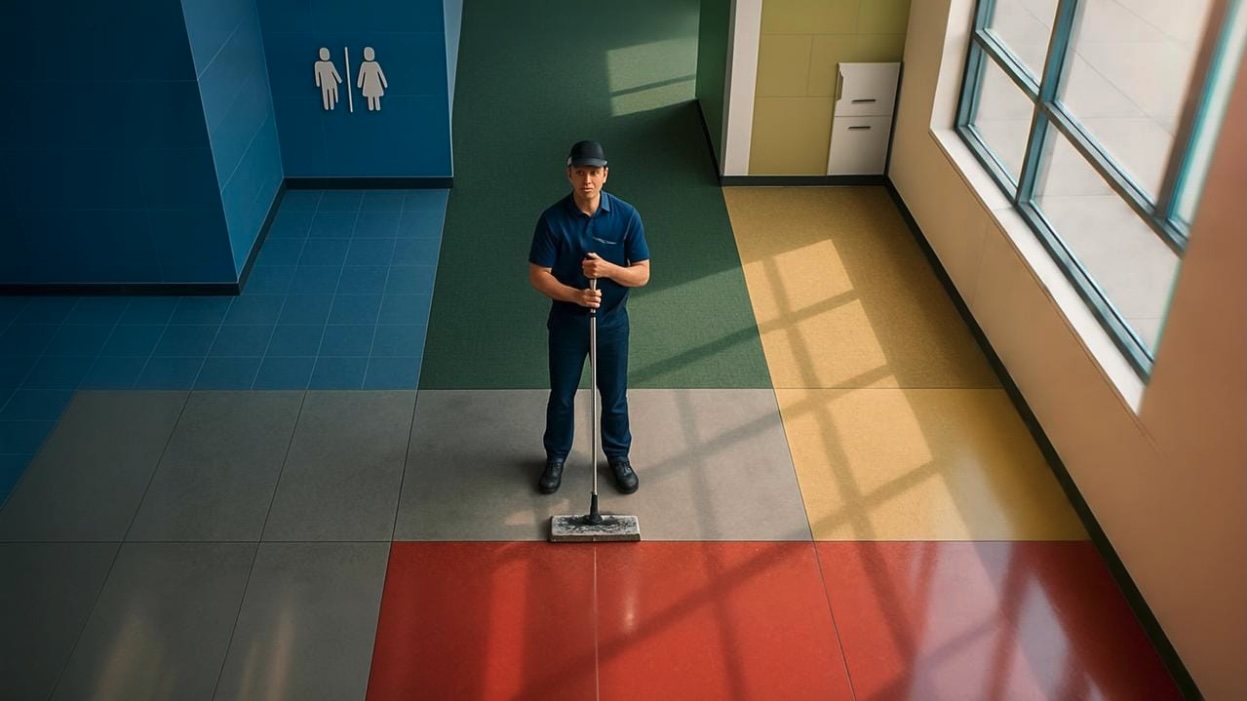
Instead of just asking, “How much to clean 8,000 square feet?”, break your building down into zones and define what each zone really needs.
Begin by mapping your space into simple groups: reception and lobby, open office and cubicles, private offices and conference rooms, restrooms, kitchens and breakrooms, and any specialty areas such as server rooms, labs, exam rooms, storage, or warehouse sections. This list becomes the backbone of your scope.
Next, decide what happens in each zone and how often. For example, you might expect every-visit trash removal, restroom cleaning and restocking, and basic floor care everywhere people walk daily. You might set weekly expectations for full dusting, detailed vacuuming, and kitchen appliance wipe-downs, and then monthly expectations for things like vents, high dusting, and baseboards. Writing this down in clear language gives you a simple checklist to share with cleaning companies.
From there, document what is “included” in routine service and what is considered periodic or specialty work. Routine nightly or weekly tasks should be in one section, while carpets, windows, floor refinishing, and one-time projects should be clearly separated. Finally, when you request quotes, ask companies to price the work in the format you prefer, whether that is per square foot, a flat monthly amount, or separate line items. Using the same layout with every vendor makes comparisons straightforward.
Questions to ask a Denver commercial cleaning company
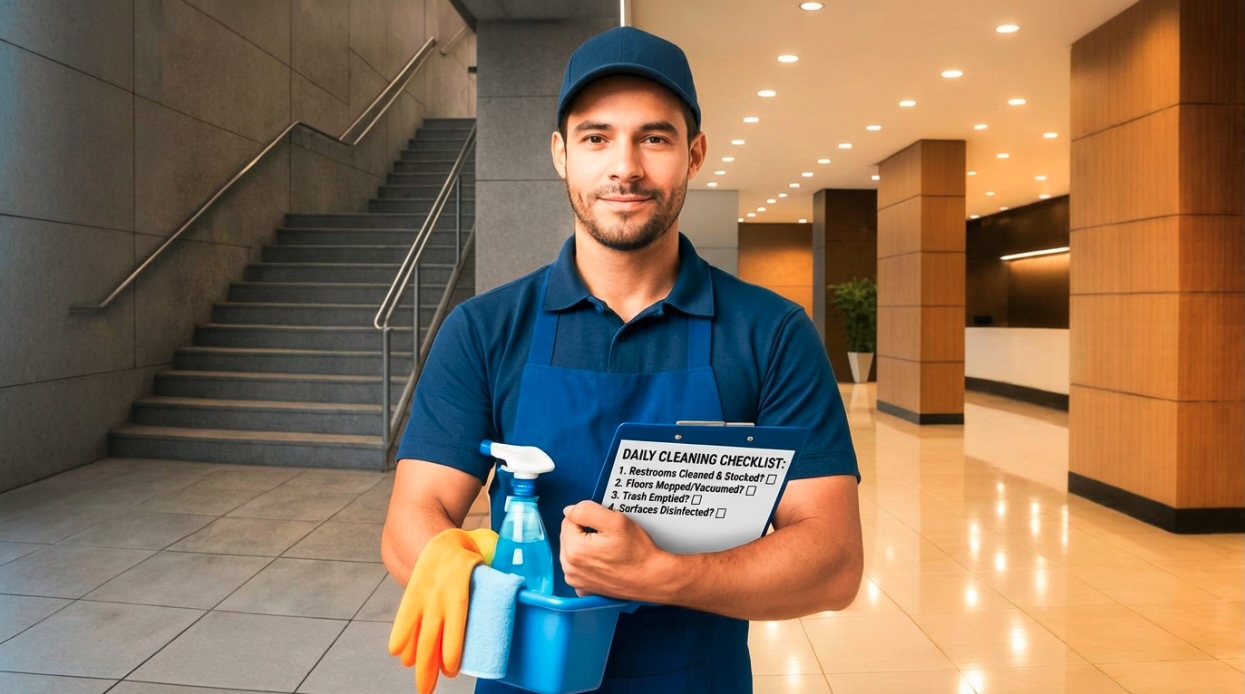
Before you sign anything, it helps to ask a few practical questions that reveal how a company actually operates.
Ask whether they are licensed and insured and if they can show proof. Ask how they screen and train cleaners, whether the same people will routinely service your building, and how they handle safety training and protective gear. Federal workplace safety agencies like the Occupational Safety and Health Administration (OSHA) highlight that janitorial staff should be trained on chemical safety, personal protective equipment, and safe work practices, so it is reasonable to expect your cleaning partner to take this seriously. Have them walk you through their standard checklist for a facility like yours and explain how they handle keys, alarms, and access after hours. It is also useful to ask about their quality control process: who inspects the work, how they track issues, and how quickly they respond when something is missed.
If your staff is sensitive to strong scents or chemicals, ask about eco-friendly or low-odor product options. Finally, request references from similar Denver businesses so you can get a real-world sense of reliability and communication.
Red flags in commercial cleaning proposals
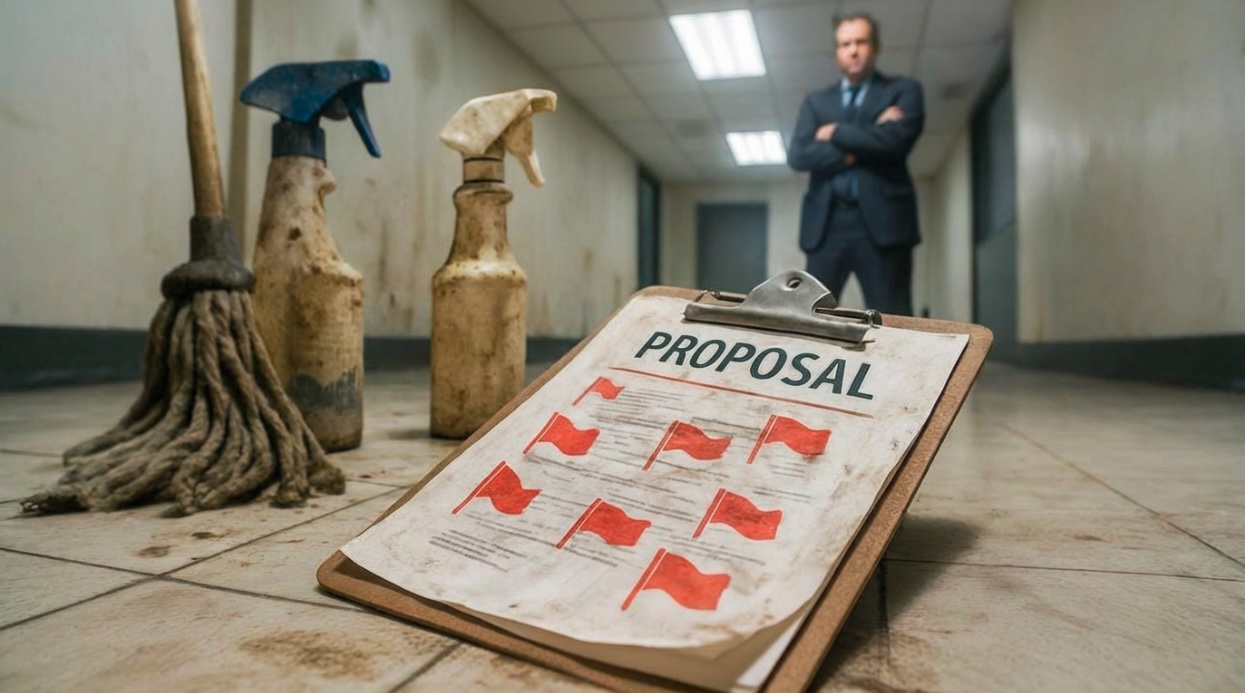
There are a few common warning signs when evaluating proposals. Vague scopes that just say “general cleaning” without clearly listing tasks are a concern. Proposals that barely mention restrooms or breakrooms can be a problem, because those areas require the most consistent work. Unusually low prices compared to other quotes, with no convincing explanation, often signal that labor hours are being cut somewhere.
It is also worth being cautious if a company cannot or will not show proof of insurance, seems uninterested in doing a site walkthrough before quoting, or has no clear plan for communication and follow-up. A strong provider will welcome questions about these topics and answer them clearly.
In-house janitorial staff vs outsourcing in Denver

Many Denver businesses weigh the idea of hiring their own janitorial staff against outsourcing to a commercial cleaning company.
An in-house team gives you direct control over who is in the building and how tasks are prioritized. Staff can sometimes help with small non-cleaning tasks, like event setup or minor maintenance. However, you are responsible for recruiting, training, supervising, covering sick days and vacations, and purchasing and maintaining all the equipment and supplies. It can also be harder to scale up or down quickly if your needs change.
Outsourcing shifts much of that burden to a specialist. The provider hires, trains, and manages cleaners, brings their own equipment and chemicals, and can usually adjust your scope and frequency as your business grows. The trade-off is that you have less direct control unless you specifically request a dedicated crew, so a clear scope and good communication become critical. For many small and mid-sized offices, outsourcing becomes more cost-effective once you factor in wages, benefits, supplies, and management time.
When you are ready to scope commercial cleaning for your Denver facility
If you are comparing commercial cleaning services in Denver, start by mapping your building into zones, deciding what each area needs and how often, and writing a simple, clear scope. Then collect a few quotes that follow that same outline so you can see who is truly offering the best fit rather than just the lowest headline price. Whether you run a growing office, a busy retail shop, or a regulated medical practice, a well-scoped cleaning plan will keep your space consistently clean, safe, and welcoming.
When you are ready for professional help, you can reach out to BroomTheRoom’s licensed, insured cleaning team to discuss your building, your goals, and your budget, and get a commercial cleaning quote tailored to your Denver facility.