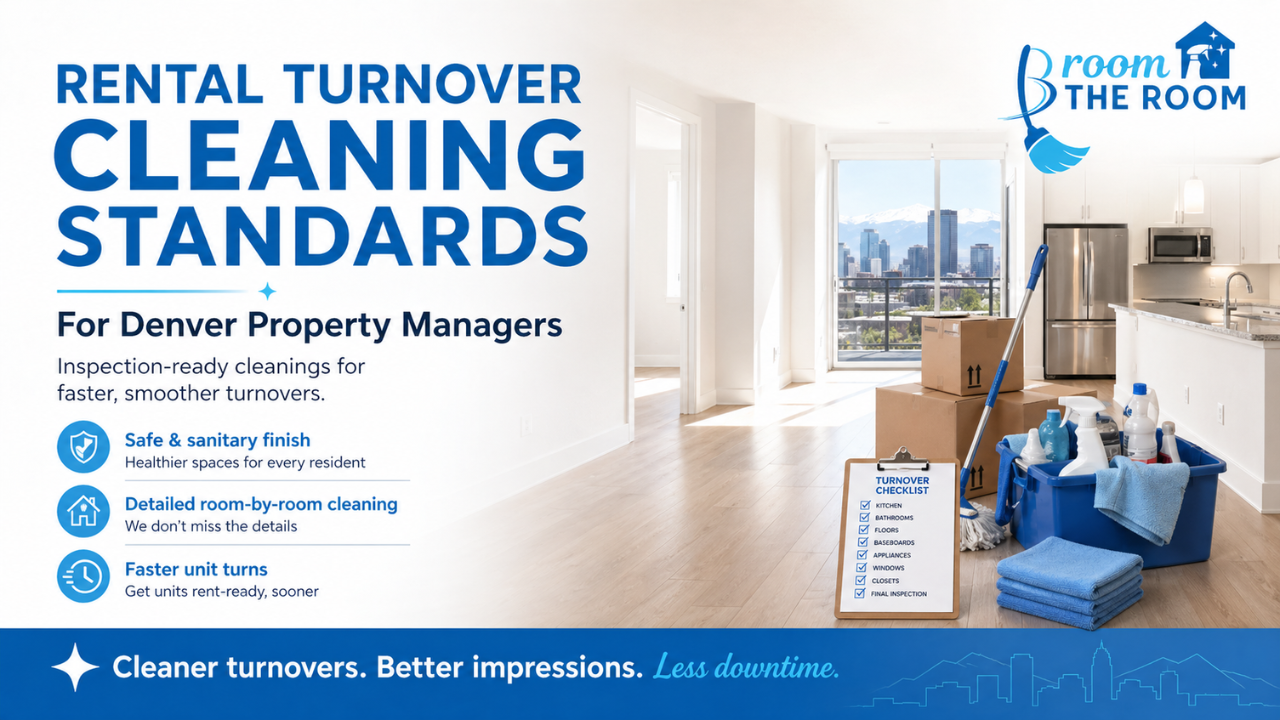
If you’re managing rentals in Denver, solid turnover cleaning standards can help you get units ready faster, cut down on rework, and give every new resident a more consistent move-in experience. I like to keep those standards simple and clear. They should spell out what move-in ready means, lay out room-by-room inspection points, set realistic service timelines, and connect cleaning notes to the work-order process so fewer details get missed.
TL;DR — Rental Turnover Cleaning Standards for Denver Property Managers
The guide explains how Denver property managers can standardize apartment turnover cleaning with clear scopes, inspection points, service timelines, and work-order communication.
Key takeaways:
- Rental turnover cleaning should be measured by readiness, not just completion.
- Each room needs defined inspection points for surfaces, fixtures, appliances, floors, and odors.
- A standard scope helps managers compare cleaning quality across units and teams.
- Denver rental licensing is tied to minimum housing standards, so safe and sanitary conditions matter.
- Service timelines should match leasing deadlines, maintenance needs, and final inspection windows.
- Work orders should separate cleaning, maintenance, damage, pest, odor, and supply issues.
What are rental turnover cleaning standards?

When I talk about rental turnover cleaning standards, I mean clear, written expectations for how clean a unit needs to be before the next resident moves in. It takes a vague request like make it clean and turns it into a real, room-by-room scope with inspection points, timing, notes, and follow-up steps. That way, everyone knows exactly what done looks like.
For Denver property managers, that kind of clarity matters. Turnovers usually happen fast, and there are a lot of moving parts. Maintenance needs access, leasing needs photos, new residents have a move-in date, and vendors need basics like parking, keys, and clear instructions. A standard process keeps the whole turnover on track and helps everyone work from the same expectation.
Why do Denver property managers need turnover standards?

If you manage rental properties in Denver, solid turnover standards make the move-in experience smoother and help cut down on avoidable back-and-forth. I’ve seen plenty of units that look clean in photos but still feel off in person. Crumbs tucked inside cabinets, appliances that smell, dusty baseboards, or a bathroom that feels rushed can leave a bad first impression fast.
Here in Denver, the City and County of Denver defines a residential rental property as a building, structure, or accessory dwelling unit rented or offered for rent as a residence for 30 days or more. The city’s rental licensing program is part of its effort to support minimum residential rental housing standards. That gives property managers an important baseline, and cleaning plays a real role in how that standard shows up day to day.
I don’t see cleaning standards as a replacement for maintenance, inspections, or legal compliance. They support the practical side of turnover. The goal is simple: to present a safe, sanitary, cared-for unit before the keys are handed over. When that part is handled well, residents feel it right away.
What should be included in a rental turnover cleaning scope?
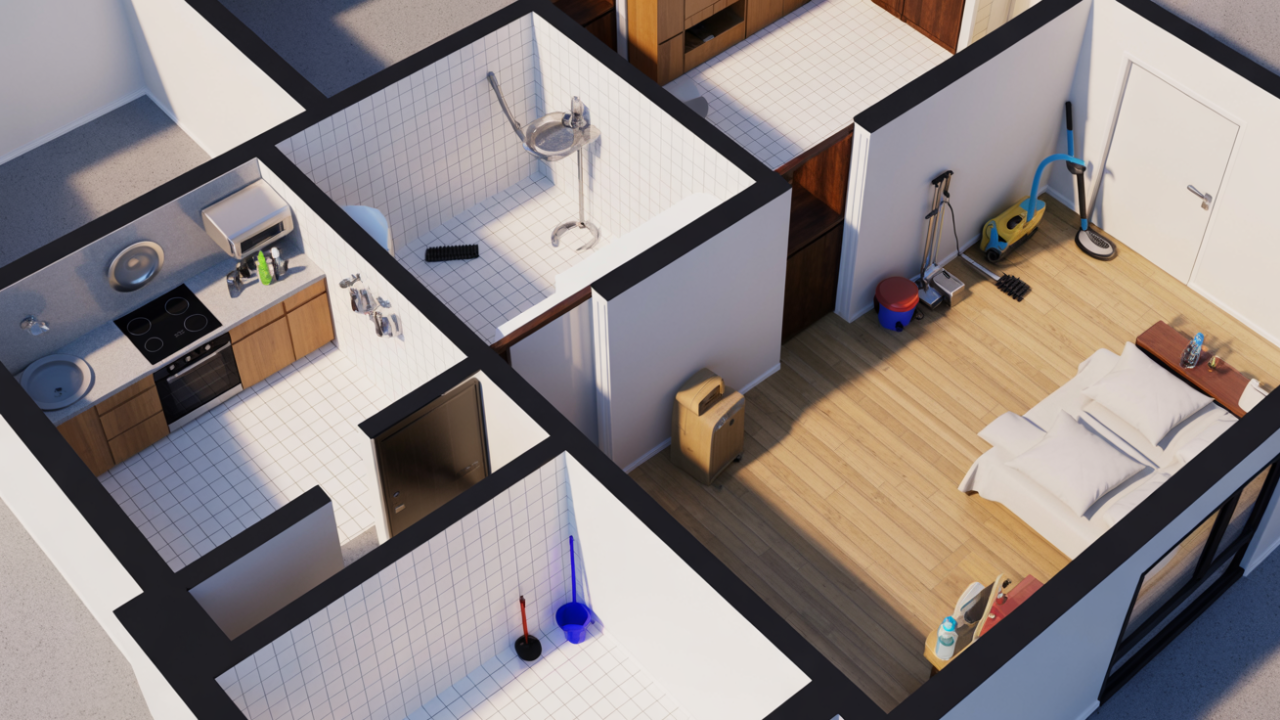
When I put together a rental turnover cleaning scope, I want it to be clear from the start. It should cover the full space, including kitchens, bathrooms, bedrooms, living areas, closets, floors, windows, doors, fixtures, and the final touchpoints that make the home feel ready for the next resident. It also needs to explain what is included in cleaning and what should be handed off to maintenance.
I like to break turnover work into three simple categories so my cleaning team is not left guessing, and the property manager knows what needs a separate work order.
Standard cleaning
This is the routine work that gets the property clean, fresh, and ready for move-in.
- Dusting and wiping surfaces
- Vacuuming and mopping floors
- Cleaning cabinet interiors
- Wiping appliance exteriors
- Cleaning sinks, toilets, showers, tubs, and mirrors
- Wiping baseboards
- Removing trash
Detail cleaning
This is the extra attention that helps the space feel finished and inspection-ready.
- Cleaning inside appliances
- Wiping drawer tracks
- Cleaning door frames, vents, and window tracks
- Detailing fixture edges
- Removing hard water spots
- Cleaning floor edges and corners
- Removing leftover adhesive or small residue
Escalation items
Some issues are outside the normal cleaning scope and should be documented for maintenance or a separate work order.
- Damage
- Stains that do not come up with normal cleaning
- Pest activity
- Heavy odors
- Mold concerns
- Broken fixtures
- Missing parts
- Biohazards
- Large-item removal
- Unsafe access
This kind of structure keeps things simple. My team knows what to clean, what to detail, and what to flag. The property manager gets a clear picture of what is done and what needs follow-up.
For the kitchen, my standard is pretty simple. It should look clean, smell fresh, and feel ready for the next resident the second they walk in. Kitchens get a lot of attention during inspections because they deal with food storage, appliances, grease, plumbing, and the surfaces people use every day.
A solid kitchen turnover should cover the everyday essentials and the small details people notice right away. That means cabinet interiors, appliance exteriors, sinks, counters, and all the usual surfaces should be cleaned and wiped down. If detailed work is needed, I also include the inside of appliances, drawer tracks, buildup around fixtures, floor edges, and small leftover residue. If I come across damage, broken parts, leaks, heavy odor, mold concerns, or anything unsafe, I flag it right away so it can be handled separately instead of being treated like a basic cleaning item.
A good turnover clean should make a unit feel ready the minute someone walks in. For me, that means covering the everyday essentials and the small details people notice right away. It also means being clear about what is standard cleaning and what needs to be documented and handed off for maintenance or a specialty service.
Kitchen turnover standards

When I clean a kitchen for turnover, I focus on the surfaces people use every day and the places that quickly make a space feel either fresh or forgotten. I wipe down cabinet interiors, appliance exteriors, sinks, counters, and the usual touchpoints throughout the room.
If the kitchen needs more detail, I also clean inside appliances, drawer tracks, buildup around fixtures, floor edges, and any small leftover residue that did not come up with a basic wipe-down.
If I find damage, broken parts, leaks, strong odor, mold concerns, or anything unsafe, I flag it right away. I do not treat those as basic cleaning items, because they usually need a separate fix.
When I inspect a kitchen, I’m looking for this:
- The refrigerator is empty, wiped down, odor-free, and free of food residue
- The freezer is empty, wiped, and free of loose debris
- The oven and stovetop are cleaned based on the approved scope
- The microwave is clean inside and out
- The dishwasher handle, edges, and interior are checked
- The sink, faucet, drain area, and disposal opening are cleaned
- Cabinet shelves, drawers, pulls, and fronts are wiped down
- Countertops and backsplash are clean and dry
- The floor is swept and mopped, including edges and corners
- Trash, food, and abandoned supplies are removed
If the refrigerator or disposal still has an odor after standard cleaning, I document it and escalate it.
Lingering odor usually points to something beyond routine cleaning, like a maintenance issue, a filter problem, disposal service, or simply needing more time to air out.
Bathroom turnover standards
Bathrooms need to feel sanitary, polished, and truly ready. This is one of the first places a new resident notices, and people decide fast whether a unit feels cared for based on the bathroom.
When I clean a bathroom for turnover, I pay attention to both sanitation and the little details around fixtures, corners, and high-touch surfaces.
Here’s what I check:
- The toilet bowl, seat, lid, tank, base, and surrounding floor are cleaned
- The sink, faucet, drain, counter, and vanity are wiped down
- The mirror is streak-free
- The tub, shower, tile, fixtures, and glass are cleaned
- Shower tracks, corners, and drains are checked
- Cabinet interiors and drawers are wiped
- The exhaust fan cover is dusted if it is safely reachable
- The floor is swept and mopped
- Towel bars, toilet paper holders, switches, and handles are wiped
- No hair, soap scum, strong odor, or visible residue is left behind
The American Cleaning Institute recommends regular cleaning of high-touch surfaces and cleaning other surfaces when they are visibly dirty. Disinfecting makes the most sense in situations where someone has clearly been ill. For turnover cleaning, that means I build details like handles, switches, faucets, and railings into the standard checklist instead of treating them like extras.
Bedroom, living area, and closet standards
Empty rooms show everything. Dust, debris, marks, leftover items, and dirty floor edges stand out fast, especially in bedrooms, living spaces, and closets. A solid turnover should leave these areas feeling fresh, empty, and ready for someone to move in.
When I inspect these spaces, I’m checking that:
- Floors are vacuumed or mopped
- Baseboards are dusted and wiped where needed
- Closet shelves, rods, and tracks are cleaned
- Window sills, tracks, and blinds are dusted
- Doors, handles, and switch plates are wiped
- Vents and reachable ledges are dusted
- Cobwebs are removed
- No abandoned items remain
- Visible wall marks are spot-cleaned if it is safe for the finish
- Carpet condition is documented separately if stains remain
I also think it is important to be clear about what cleaning teams are not responsible for. Paint repair, carpet damage, broken blinds, and flooring issues should go into a maintenance or damage workflow, not get lumped into a standard turnover clean.
Floor care standards
Floor care needs its own standard because not every floor issue is a cleaning issue. A routine vacuum or mop is very different from carpet extraction, grout cleaning, stripping, waxing, or repair work.
For carpet, I would usually include vacuuming, edge work, and documentation of any visible stains. For hard floors, standard service would usually include sweeping, mopping, corner cleaning, and removing normal residue.
It helps a lot when property managers decide ahead of time what should trigger an add-on service. That might include:
- Pet odor
- Stains that remain after standard cleaning
- Heavy soil in traffic lanes
- Sticky residue that remains after mopping
- Grout lines that need detailed cleaning
- Damaged or dull floor finish
That kind of clarity prevents confusion when a unit needs more than routine turnover cleaning.
How I would set turnover cleaning SLAs
If I were helping a property manager build turnover cleaning SLAs, I would keep them simple, specific, and easy to verify. The goal is to avoid guesswork for everyone involved.
I would start with a clear definition of what a standard turnover clean includes in each room. Then I would separate anything that counts as detail work, specialty cleaning, maintenance, or damage.
From there, I would make sure the SLA covers a few basic things:
- What gets cleaned every time
- What condition each room should be left in
- What needs to be documented with notes or photos
- What should be escalated right away, like leaks, mold, strong odor, or broken parts
- What triggers an add-on service or maintenance ticket
- How abandoned items, trash, and food should be handled
- How soon the cleaner should report issues that prevent the unit from being truly ready
I would also make the inspection points pass or fail, not vague. Clean, empty, odor-free, wiped down, and free of visible residue are much easier to work from than broad words like touched up or refreshed.
The best SLAs also separate cleaning from repair. That sounds obvious, but it is where a lot of turnover confusion starts. If the team is expected to clean around damage, document it, and move on, that should be written clearly. If they are expected to stop and wait for approval when they find a problem, that should be clear too.
Most of all, I would build the SLA around consistency. A unit should not feel ready only when the easiest turnovers come through. The standard should hold up across kitchens with odor issues, bathrooms with buildup, and empty rooms that show every bit of dust along the baseboards.
When the scope is clear, the inspection points are specific, and escalation rules are already in place, turnovers move faster and with a lot less back-and-forth.
If you manage rentals, a clear turnover cleaning SLA can save everyone a lot of stress. I always recommend building it around the real factors that affect timing, like unit size, condition, access, and the actual move-in deadline. When those expectations are clear from the start, turnovers go more smoothly for your cleaning team, maintenance crew, leasing staff, and the incoming resident.
At a minimum, the agreement should cover when a unit is truly ready for cleaning, how long the cleaning is expected to take, and how issues are reported if something is off.
The biggest thing is to keep the SLA realistic. If the schedule is too tight, the pressure falls on everyone. Cleaners get rushed, maintenance gets squeezed, leasing has less room to problem-solve, and the new resident walks into that stress. A solid, realistic agreement helps the whole turnover feel more organized, dependable, and move-in ready.
How should cleaning fit into the work-order flow?
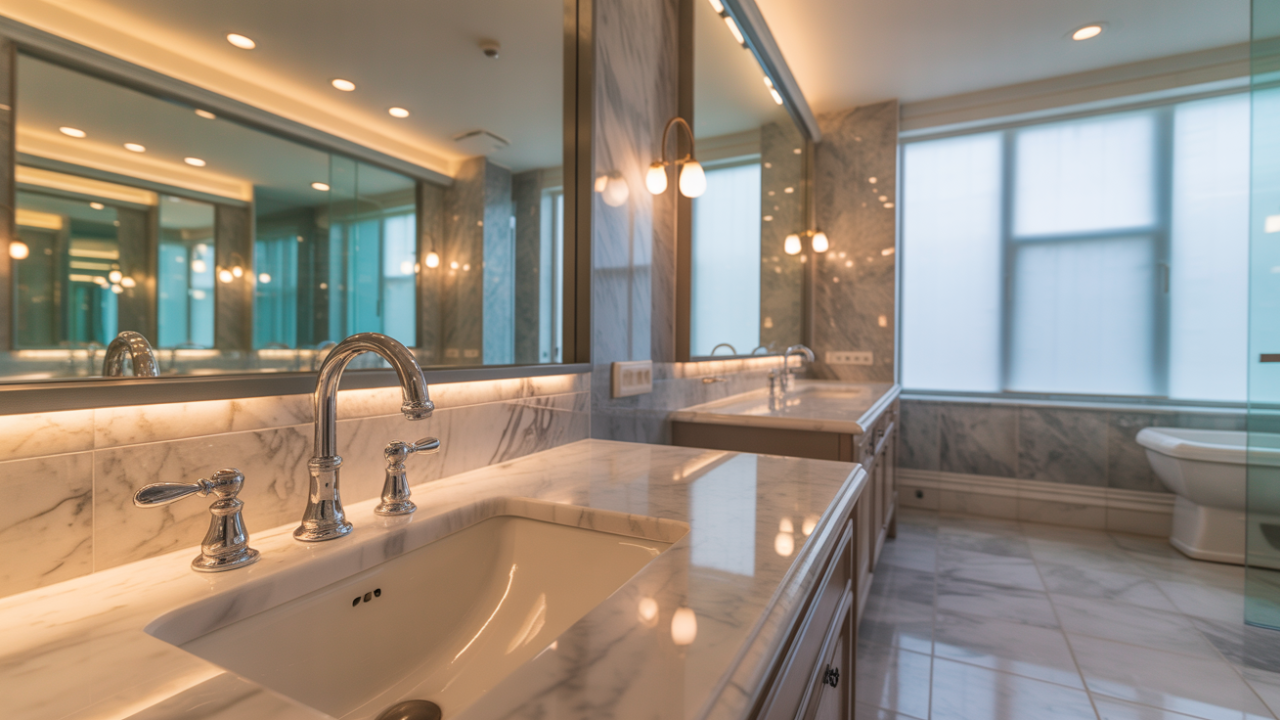
I like cleaning to fit into the work-order flow as one clear step in the middle of the turnover. It should sit right between move-out inspection, maintenance, and final leasing approval so everyone can see what is actually ready, what is blocked, and what still needs a different trade.
- Move-out inspection is completed
- Trash-out or bulk removal is completed
- Maintenance repairs are finished, or they are clearly separated from cleaning
- My cleaning team receives access notes and a clear scope before the job starts
- If we run into blockers, we report them with photos right away
- Once cleaning is done, we send the final photos
- The property manager reviews the unit and creates any follow-up work orders that are still needed
- Final inspection clears the unit for move-in
I also would not bury maintenance problems inside cleaning notes. If we find something like a broken towel bar, a leaking sink, pest activity, a damaged blind, or lingering smoke odor, it needs its own work order. It keeps the turnover cleaner, clearer, and a whole lot easier to manage.
What should cleaners report during turnover?
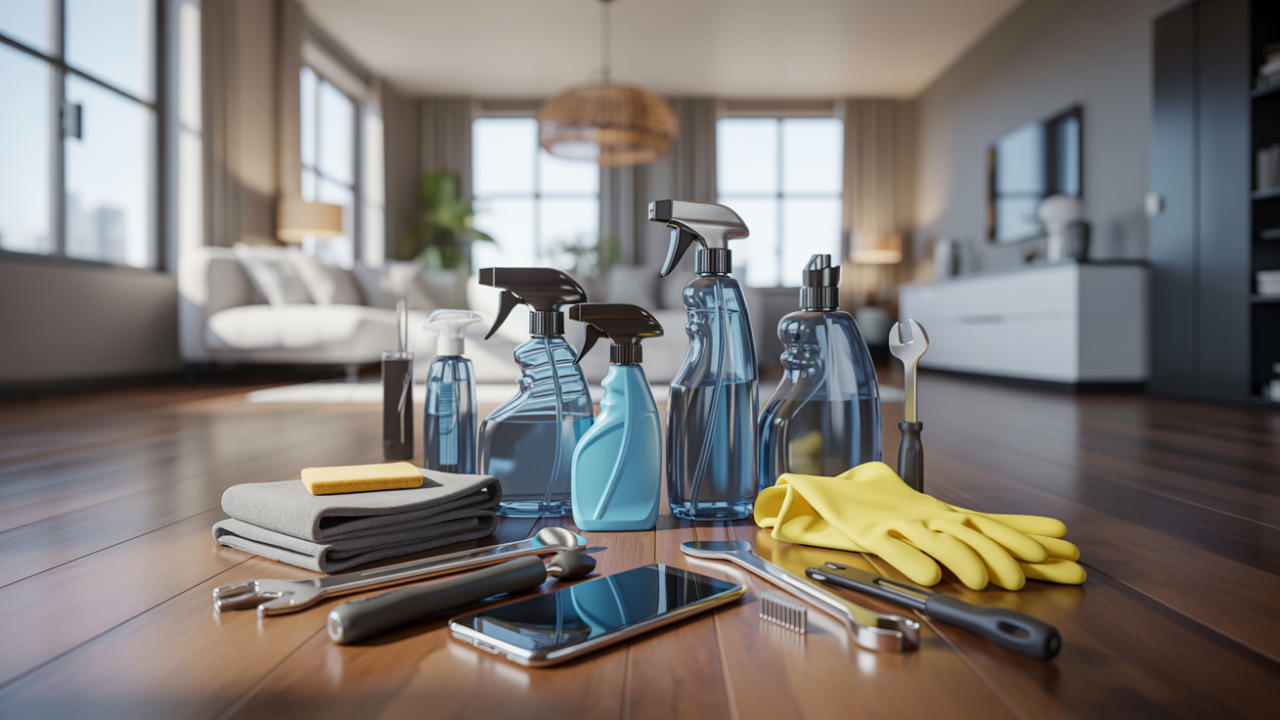
I do a final inspection, and I want it documented in a way that’s simple, clear, and easy for the property manager to act on right away. A good final report should include:
- Time-stamped photos of each main area after the cleaning is finished
- Close-up photos of anything that needs attention, especially damage, stains, missing items, or safety concerns
- A basic checklist showing what was completed and what could not be completed
- Short room-by-room notes so there’s no guessing later
- A clear record of anything that blocked the clean, like no access, wrong keys, alarm problems, utilities being off, or large items left behind
- Notes on anything outside the scope of cleaning, including pest activity, strong odors, water damage, suspected mold, appliance problems, carpet damage, or biohazards
- Before-and-after photos when a space was in rough shape or when a problem could be questioned later
- The date, arrival and finish time, and the name of the cleaner or team who completed the work
- A simple ready or not ready status so the property manager knows immediately whether the unit can move to the next step
- Any follow-up recommendation if another vendor is needed, like maintenance, flooring, pest control, or restoration
- Confirmation that unsafe conditions were reported and left alone if they were outside the cleaning team’s scope
I always recommend keeping the format consistent every time. If the same checklist, photo order, and reporting process are used for every turnover, it’s much easier to catch problems early and avoid surprises during the final walkthrough.

I document every final inspection with a checklist, photos, notes, and any unresolved work order items.
My goal is to make it easy to see the unit’s status at a glance. I want it to be clear whether the space is clean, ready, blocked, or still waiting on another service.
The final photos that help most usually include:
- A kitchen overview
- The inside of the refrigerator and oven
- A bathroom overview
- The tub or shower
- The main living area
- Each bedroom
- Closets
- Floors
- Any reported issue
- Any item that was re-cleaned and completed
I label each photo with the unit, date, and room so everything stays organized and easy to review later.
That kind of documentation helps managers compare vendor performance, answer resident questions faster, and make better decisions for future turnover scopes.
How can property managers reduce re-cleans?

Property managers can reduce re-cleans by giving the cleaning team a clear scope, accurate access notes, realistic timing, and fast answers when issues come up. Most re-cleans happen because expectations were unclear, the unit was not ready, or a maintenance issue was treated like a cleaning issue.
Practical ways to reduce re-cleans:
- Use the same checklist for every comparable unit.
- Walk the unit before assigning cleaning.
- Remove trash and abandoned items first.
- Finish messy maintenance before cleaning.
- Flag pet, smoke, or heavy-soil units in advance.
- Give cleaners parking, entry, and lockbox notes.
- Require photos for completed work.
- Review trends monthly.
When one issue repeats across multiple units, update the standard. The best turnover process gets cleaner over time.
FAQs

What is apartment turnover cleaning in Denver?
Apartment turnover cleaning in Denver is the detailed cleaning performed after one resident moves out and before the next resident moves in. It usually includes kitchens, bathrooms, appliances, floors, cabinets, closets, windows, doors, and a final presentation. It may also include reporting damage, odors, pest concerns, or maintenance blockers.
Is rental turnover cleaning the same as commercial cleaning?
Rental turnover cleaning is not the same as routine commercial cleaning because the goal is move-in readiness for a specific unit. Commercial cleaning often follows an ongoing schedule for offices or shared spaces. Turnover cleaning is more detailed, time-sensitive, and tied to leasing, inspections, maintenance, and resident expectations.
How long should rental turnover cleaning take?
Rental turnover cleaning time depends on unit size, condition, number of bathrooms, appliances, flooring, pets, and whether trash or maintenance issues are still present. A lightly used studio may be much faster than a large pet-friendly unit with heavy appliance buildup. The best approach is to assign time by condition, not just square footage.
Should property managers require turnover photos?
Property managers should require turnover photos because photos create a clear record of finished work and unresolved issues. Photos also help leasing teams, maintenance teams, cleaning teams, and residents stay aligned. A simple photo standard can reduce confusion and make re-cleans easier to verify.
Summary

A smoother rental turnover starts with a clear cleaning standard. If your Denver turnovers have been feeling rushed or too subjective, I’ve found that a simple, consistent process makes a big difference. That means clearly defining the scope of work, what gets inspected, how quickly the unit needs to be turned, how updates are reported, and how work orders get passed along. When those pieces are clear, each unit is easier to prep for the next resident and a lot less stressful to manage.
If you need a more dependable turnover cleaning process in Denver, I’d love to help. Reach out today. Our licensed, insured, and vetted cleaning team supports apartment turnover cleaning, move-in and move-out cleaning, and commercial cleaning with the personal care and consistency your properties rely on.